Roots of Change
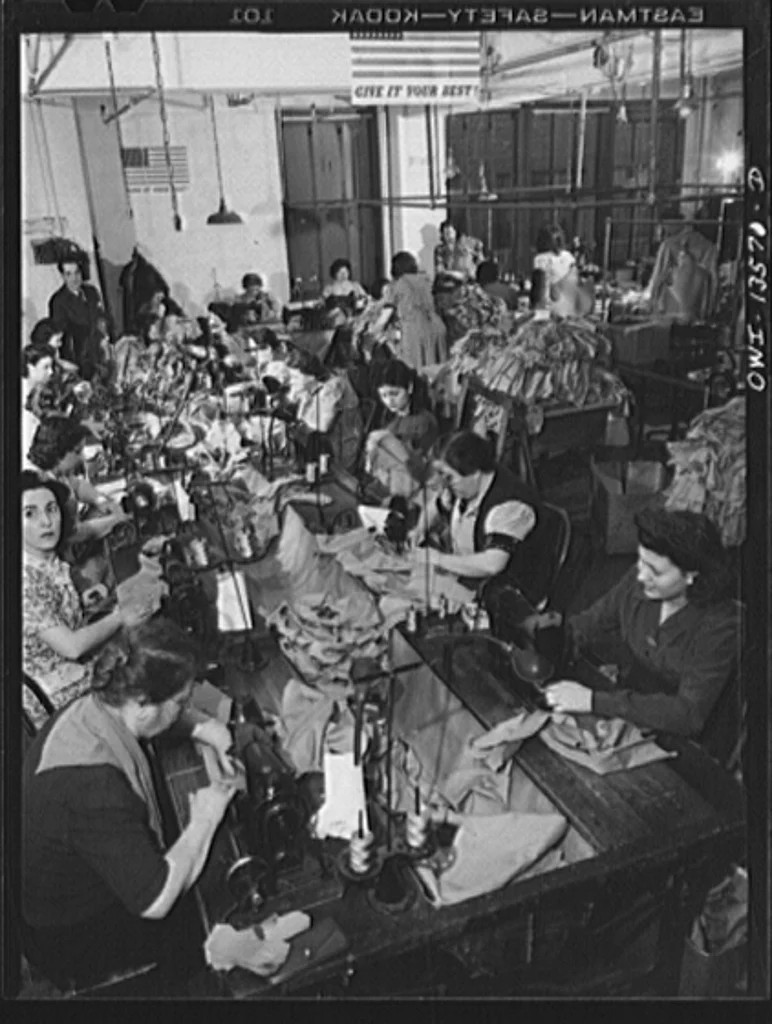
Our roots date back to the beginning of the 20th century when garment workers – predominantly women and immigrants – organized to fight for fair working conditions. On March 25, 1911, in New York City, the Triangle Shirtwaist Factory caught fire, killing 145 garment workers. Many could not escape the burning building because the managers had locked the doors and exits.
The fire not only led to stronger safety regulations, but also the formation of the International Ladies Garment Workers Union (ILGWU) – our oldest predecessor union – which began the fight against sweatshops in Canada and the United States.
1900: 11 local unions joined to form the International Ladies’ Garment Workers’ Union (ILGWU)
1914: The Amalgamated Clothing Workers of America held their founding convention and set the goal of organizing men’s clothing workers industry-wide.
New Beginnings
1976: The Amalgamated Clothing Works of America and the United Textile Workers of America merged to form the Amalgamated Clothing and Textile Workers Union (ACTWU)
1995: ILGWU merged with ACTWU to form the Union of Needletrades, Industrial and Textile Employees (UNITE)
The Work Continues
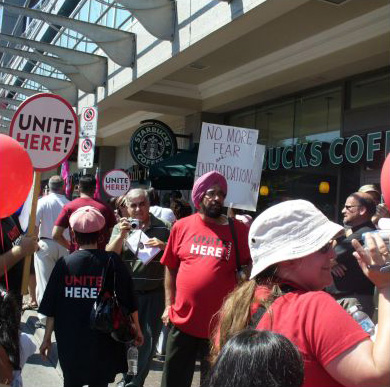
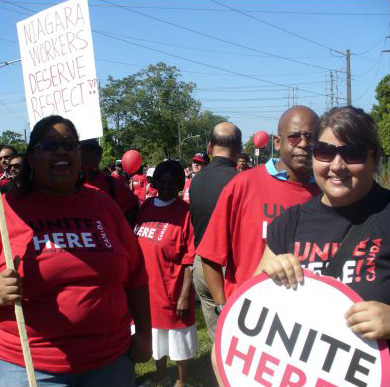
2004: UNITE merged with Hotel Employees and Restaurant Employees International Union (HERE) to form UNITE HERE.
2009: Over 100,000 workers voted to leave UNITE HERE and form a new union. Dissatisfied with the priorities of UNITE HERE, our members took matters into their own hands and formed Workers United. On March 21, 2009, Workers United held its founding convention in Philadelphia, PA





.png)

.png)


